

Some Text Skip to main content

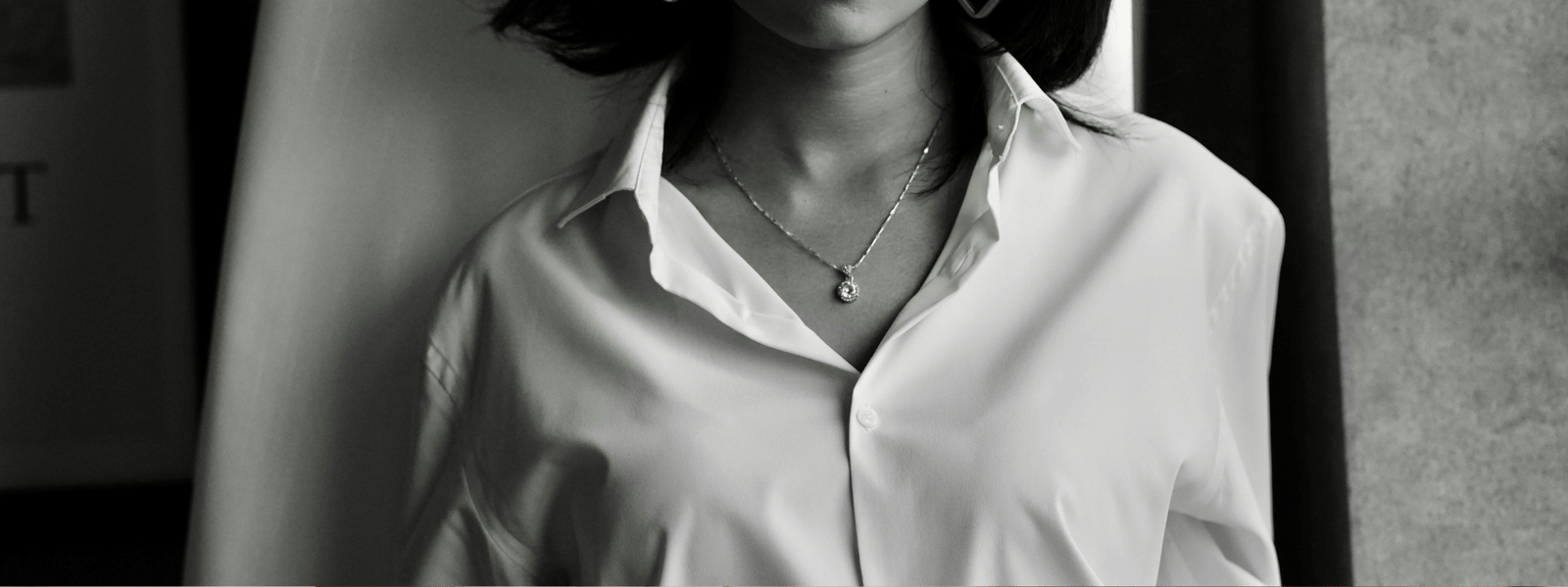
The white shirt is a classic. One of those pieces that people say everyone should have in their wardrobe. But does it have to be the same for everyone?

What if I told you that you can have a classic without sacrificing your personality? I’m going to use Fashion Psychology to talk about how we can wear the white shirt from Chanel’s latest show at Paris Fashion Week to balance two fundamental human needs: belonging and autonomy. The show featured three versions of the white shirt, and each seemed to tell a story. It remains a classic — but now, with new possibilities for identity.

The White Shirt for Women

Historically, the white shirt has always been a symbol of power, status, and belonging. A social uniform that communicates: I understand the rules of the game.  It’s impossible to talk about this without thinking about power and gender, because the corporate dress code was born within a patriarchal structure and is also a form of social control: it regulates behaviours, gestures, what we wear, and even the body, shaping what is considered acceptable. Erving Goffman was a sociologist and said that social life is a stage, and clothing is part of the costume we use in each social interaction.

In the workplace, this costume was shaped by the male gaze, and women ended up assuming this performance of neutrality to guarantee legitimacy and occupy spaces. When women began to occupy these spaces, they needed to adopt the masculine costume to be taken seriously. The white shirt, the blazer, the tailored trousers… were a way of saying “I belong,” even if it meant hiding parts of who they are.

The Human Need for Belonging vs. Authenticity

There is a tension between the human need for belonging (Baumeister & Leary) and the need for autonomy, to feel that our choices come from within, and not from external imposition (Self-determination theory of Deci & Ryan). Balancing these two needs fosters emotional stability and well-being.

To feel like we belong to a group, we learn and repeat the codes of the dominant group (social identity theory, by Henri Tajfel), that is, we adapt visually to occupy these spaces, using clothes that came from the male wardrobe.

That’s why Chanel’s gesture of offering a reinterpretation of the white shirt is so powerful: it rewrites the code.

Chanel removes the shirt from its neutral role and restores its right to be an expression, not camouflage. To occupy professional space without needing to erase the feminine edge.

Chanel's white shirts: You can belong — but in your own way

We can use Chanel’s white shirts as an example of how it’s possible to feel part of a group without giving up who you are.

The three models, made in partnership with Charvet (a luxury shirtmaker founded in 1838), have been completely redesigned: with a traditional men’s cut and the name “Chanel” embroidered in the cursive script used in the 1920s, but also featuring options with ruffles, transparencies, different collars, visible metal chains at the hems, wide sleeves, and unexpected combinations.

And outside of Fashion Fashion Week, we have even more options. We can choose between a more structured or more fluid fabric, a cropped or oversized cut, and details like ruffles, transparency, or unique collars, to create a piece that combines elements of our style with the corporate dress code we need to follow.

The white shirt has always been a symbol of belonging. Still, Chanel reminded us that it’s also a tool for expressing autonomy (and every one of us who studies Fashion Psychology agrees).

Explore More

Key Resources
for all your
Fashion
Psychology
Needs

Big Dress Energy

Buy the best-selling book

Online Courses

Become a Fashion Psychologist

Priscila Citera

Author Priscila Citera

Brazilian psychologist and stylist consultant challenging fashion's norms. I connect autonomy, freedom and conscious consumption with a human, political and subservise approach to personal style.

More posts by Priscila Citera