

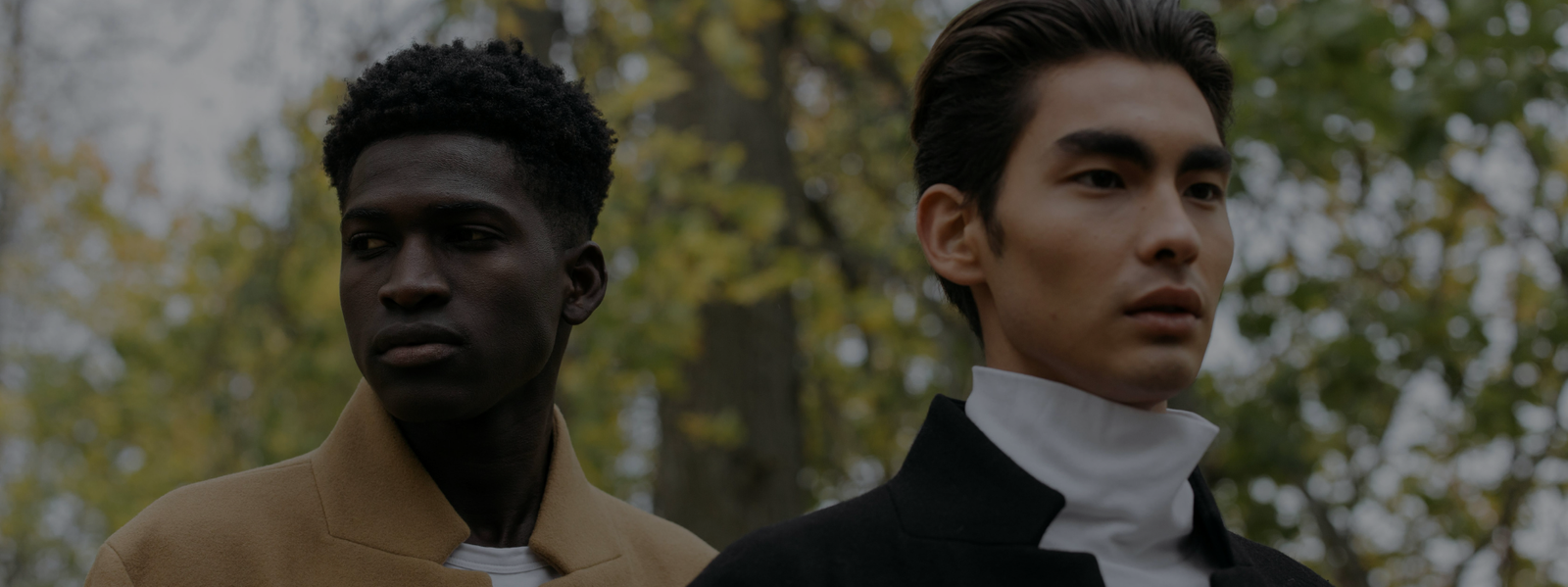
Once upon a time, being a ‘real man’ meant buttoned-up stoicism and a navy suit. But the modern man is trading rigidity for range: from linen co-ords to quiet luxury cashmere, he’s experimenting with how masculinity looks and feels.
Most men don’t wake up thinking, ‘Today I’ll explore masculinity’. They think: Do I look good? Is this right for where I’m going? Is this clean? Do I look like myself? Is this too much?
Reclaiming manhood today doesn’t mean rejecting tradition but reshaping it through personal style. Whether it’s a Gen Z banker in pearls or a CEO in soft tailoring, clothes are no longer just about function, they’re about feeling and impact on perception and behaviour.
This is Fashion Psychology in action.
Fashion isn’t just fabric. It’s a mirror and, sometimes, a map.
Psychologists coined the term enclothed cognition to describe how what we wear can influence how we think and act – especially when the clothing has strong symbolic meaning and we physically wear it. Translation? Clothes don’t just sit on your body. They can shape how you show up.
But the bigger story isn’t ‘wear X and become confident forever’. It’s alignment.
The self-discrepancy theory says that when there’s a gap between who you feel you are now and who you want to be, it creates tension. People try to reduce that gap. Sometimes through goals, sometimes through habits. And sometimes through what they put on in the morning.
So dressing is beyond expressing identity. It can also be about closing the distance between who you are today and who you’re trying to become.
Soft Tailoring, Hard Impact
Traditionally, adult masculinity came with a narrow visual uniform: sharp suits, dark palettes and functional pieces. But modern masculinity is starting to wear emotion on its sleeve – literally.
And it’s not only runway guys doing it. It’s:
- the man who’s lived in cotton polos… until he’s promoted
- the founder who wore sneakers everywhere… until investors entered the room
- the corporate guy who wants to look senior… without looking like he’s trying too hard
Designers like Grace Wales Bonner and Ludovic de Saint-Sernin are using fabrics, color and silhouette to make space for softness, fluidity and depth. This shift isn’t just aesthetic – it’s psychological. Research on fashion self-congruence suggests that when what you plan to wear matches your ideal self, you’re more likely to use clothing intentionally (instead of defaulting to social scripts).
So yes: men in pastels. Corporate leaders in unstructured suiting. Instead of ‘we see it everywhere’, let’s call it a permission slip with real momentum behind it.
Why ‘Just Clothes’ Never Is
From a fashion psychology perspective, fashion lets men externalize values like empathy, openness, authenticity – traits often edited out of traditional masculinity.
The precarious manhood theory suggests that masculinity is often treated like something earned and easily lost – a status that comes with constant pressure to ‘prove it’. In that context, using fashion to expand the script can be more than style. It can be choosing self-definition over constant performance.
Most men weren’t raised to develop personal style. They were dressed by someone else. Mum handles the basics first: practical, clean and fits. Later, a partner often becomes the unofficial wardrobe editor: ‘Please, not that hoodie’, ‘You need a blazer’. It’s not a lack of interest – it’s outsourced responsibility. Which is why a man taking ownership of his image can feel like a bigger deal than it sounds. Choosing how you show up – visually and nonverbally – instead of borrowing someone else’s version of ‘appropriate’ is not a small shift.
Try This Tomorrow Morning
If you want to explore your evolving style identity, start with Fashion Psychology:
- Wear your future self: Dress for the version of you that feels one step more intentional.
- Use contrast: Pair classic masculine pieces with softer elements: structured trousers with a knit polo, or leather loafers with a fluid shirt.
- Use color intentionally: Color psychology is real, but it depends on context, culture and meaning – not just the shade itself. This review explains why.
Your outfit sets expectations. Your body language confirms them. Now make them agree: dress like you mean it, move like you mean it. That’s how your presence stops being a ‘vibe’ and becomes earned trust.